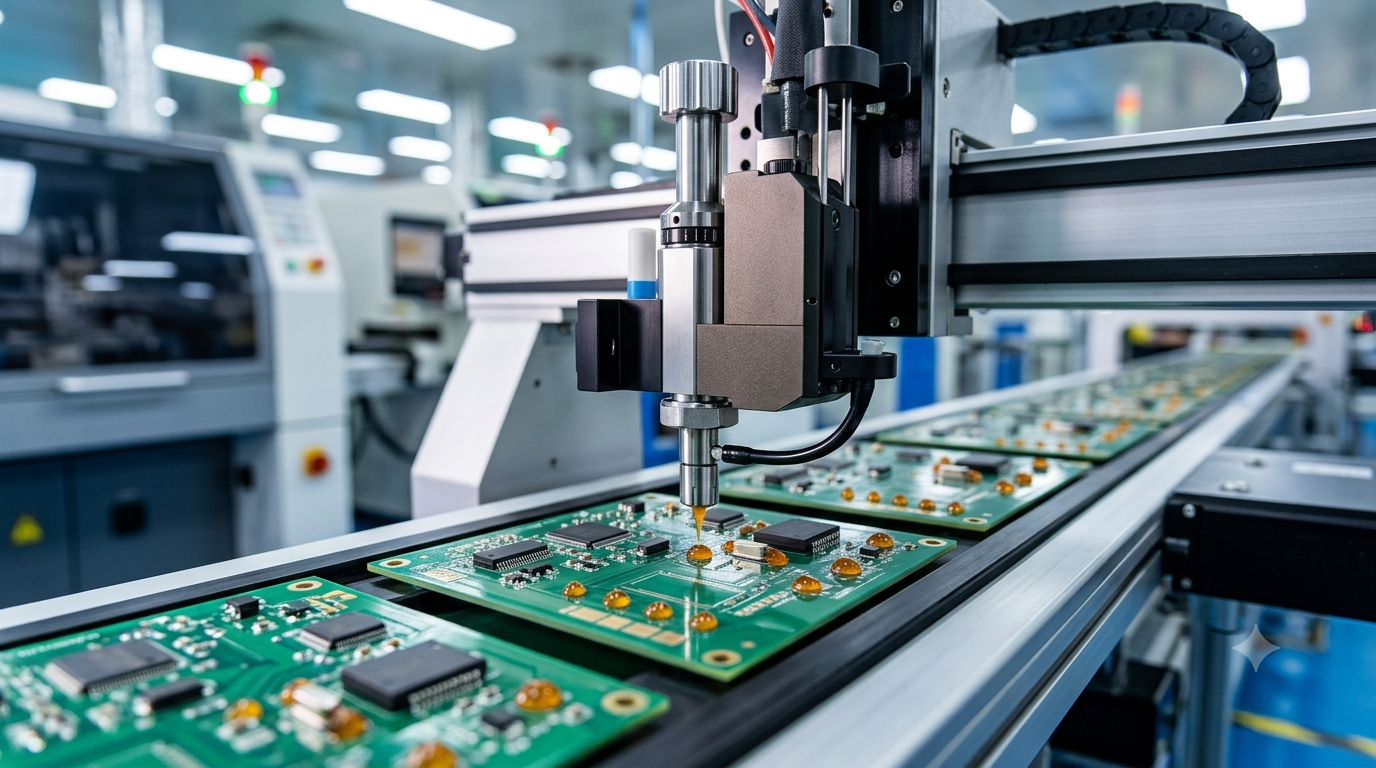
Adhesive Dispensing Valves: Complete Guide to Types, Selection, and Maintenance
In automated manufacturing, choosing the right adhesive dispensing valve is critical for achieving accurate fluid control, reducing waste, minimizing downtime, and improving production efficiency. Whether dispensing epoxy, silicone, UV adhesive, solder paste, thermal interface materials (TIM), underfill, or conductive adhesives, each valve technology offers unique advantages.
This guide explains the most common types of dispensing valves, their working principles, ideal applications, and maintenance requirements.
Types of Adhesive Dispensing Valves
Diaphragm Valve
A diaphragm valve uses a flexible membrane to isolate the adhesive from internal moving parts.
Best for:
- Cyanoacrylate (CA) adhesives
- UV adhesives
- Anaerobic adhesives
- Flux and low-viscosity fluids
Advantages:
- Excellent chemical resistance
- Prevents contamination
- Ideal for moisture-sensitive materials
Needle Valve
A needle valve opens and closes using a precision needle and seat mechanism.
Best for:
- Epoxy adhesives
- Silicone
- Oils and lubricants
- General-purpose dispensing
Advantages:
- Accurate dot and bead dispensing
- Clean shut-off
- Cost-effective solution
Spool Valve
A spool valve uses a sliding spool to control fluid flow and create a suck-back effect.
Best for:
- RTV silicone
- Grease
- High-viscosity epoxy
- Sealants
Advantages:
- Excellent anti-drip performance
- Handles high-viscosity materials
- Suitable for high-pressure applications
Auger Valve (Rotary Screw Valve)
An auger valve uses a rotating screw to meter adhesive volume precisely.
Best for:
- Solder paste
- Conductive adhesive
- Silver-filled epoxy
- Highly filled materials
Advantages:
- Good volumetric control
- Handles abrasive fillers
- Excellent for micro-dispensing
Progressive Cavity (PC) Pump
A progressive cavity pump uses a rotor and stator to create sealed cavities that move material through the pump.
Best for:
- Underfill
- Thermal paste
- Gap fillers
- Structural adhesives
- Precision dispensing applications
Advantages:
- Highest dispensing accuracy (up to ±1%)
- True volumetric dispensing
- Handles low to extremely high viscosities
- Consistent performance regardless of pressure or temperature changes
Pinch Tube Valve
A pinch tube valve opens and closes by squeezing a disposable tube.
Best for:
- Fast-curing adhesives
- UV adhesives
- Cyanoacrylates
- Solvents
Advantages:
- Fluid never contacts the valve body
- No cleaning required
- Quick tube replacement
- Low maintenance cost
Jetting Valve
A jetting valve dispenses adhesive without contacting the substrate.
Best for:
- Electronics assembly
- Semiconductor packaging
- Camera modules
- Battery manufacturing
- High-speed production lines
Advantages:
- Non-contact dispensing
- Ultra-high speed operation
- Precise micro-dot dispensing
- Ideal for uneven surfaces
Spray Valve
A spray valve atomizes fluid using assist air to create a fine coating.
Best for:
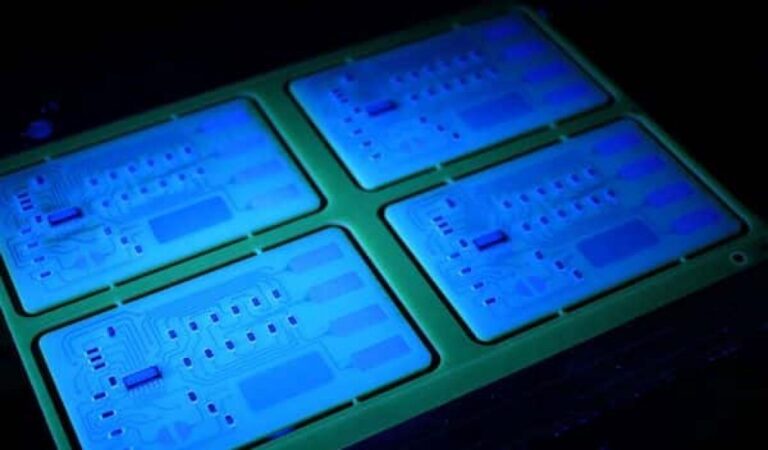
- Conformal coating
- Lubricants
- Flux application
- Surface treatments
Advantages:
- Uniform coating coverage
- Non-contact application
- High productivity for large areas
Comparison of Adhesive Dispensing Valves
| Valve Type | Viscosity Range | Accuracy | Main Advantage | Maintenance |
|---|---|---|---|---|
| Diaphragm | Low–Medium | High | Chemical isolation | Clean or replace diaphragm |
| Needle | Low–Medium | High | Precise shut-off | Regular cleaning |
| Spool | Medium–High | High | Anti-drip performance | Clean and replace seals |
| Auger | Medium–Very High | High | Filled material dispensing | Clean screw assembly |
| Progressive Cavity Pump | Low–Ultra High | Very High (±1%) | True volumetric dispensing | Clean rotor/stator |
| Pinch Tube | Low–Medium | Medium | No cleaning required | Replace tubing only |
| Jetting | Low–High | Very High | Highest speed | Clean nozzle and fluid path |
| Spray | Low | Area coverage | Uniform coating | Clean nozzle regularly |
Cleaning vs. Disposable Fluid Paths
One of the most important considerations when selecting a dispensing valve is maintenance.
Disposable Systems (Minimal Cleaning)
Pinch Tube Valve
- Replace tubing only
- No fluid contact with valve body
Disposable Diaphragm Systems
- Replace fluid path assembly
- Ideal for difficult-to-clean adhesives
Disposable Auger Systems
- Replace screw cartridge
- Minimize production downtime
Cleanable Systems
Needle Valve
- Requires periodic cleaning
- Replace needle and seals as needed
Spool Valve
- Requires cleaning of fluid chamber
- Seal replacement during preventive maintenance
Jetting Valve
- Requires precise cleaning
- Critical for maintaining dispensing accuracy
Progressive Cavity Pump
- Clean rotor and stator regularly
- Replace stator when worn
Spray Valve
- Clean nozzle to prevent clogging
How to Choose the Right Dispensing Valve
Choose a Diaphragm Valve if:
- Adhesive is moisture-sensitive
- Using cyanoacrylate or UV adhesive
Choose a Needle Valve if:
- General adhesive dispensing is required
- Cost-effective precision dispensing is needed
Choose a Spool Valve if:
- Material is thick and tends to string or drip
Choose an Auger Valve if:
- Dispensing solder paste or filled adhesives
Choose a Progressive Cavity Pump if:
- Accuracy is critical
- Adhesive is expensive
- Consistent volume is required
Choose a Pinch Tube Valve if:
- Adhesive cures quickly
- Cleaning downtime must be eliminated
Choose a Jetting Valve if:
- Production speed is critical
- Non-contact dispensing is required
Choose a Spray Valve if:
- Coating large surfaces
- Applying conformal coatings or lubricants
Conclusion
There is no single dispensing valve suitable for every adhesive application. The best choice depends on adhesive viscosity, filler content, dispensing volume, accuracy requirements, production speed, and maintenance strategy.
For most industrial applications:
- Diaphragm valves are ideal for low-viscosity and moisture-sensitive adhesives.
- Needle valves provide versatile and economical dispensing.
- Spool valves excel with high-viscosity materials.
- Auger valves are preferred for solder paste and filled adhesives.
- Progressive cavity pumps deliver the highest volumetric accuracy.
- Pinch tube valves eliminate cleaning requirements through disposable tubing.
- Jetting valves offer unmatched dispensing speed and non-contact operation.
- Spray valves provide efficient coating of large surfaces.
Selecting the correct adhesive dispensing technology can significantly improve process reliability, product quality, and manufacturing efficiency while reducing maintenance costs and downtime.
Please contact GlueRu to provide solutions to your challenges!