UHF Anti-Metal RFID Tag: Why It’s Needed
What is a UHF Anti-Metal Tag?
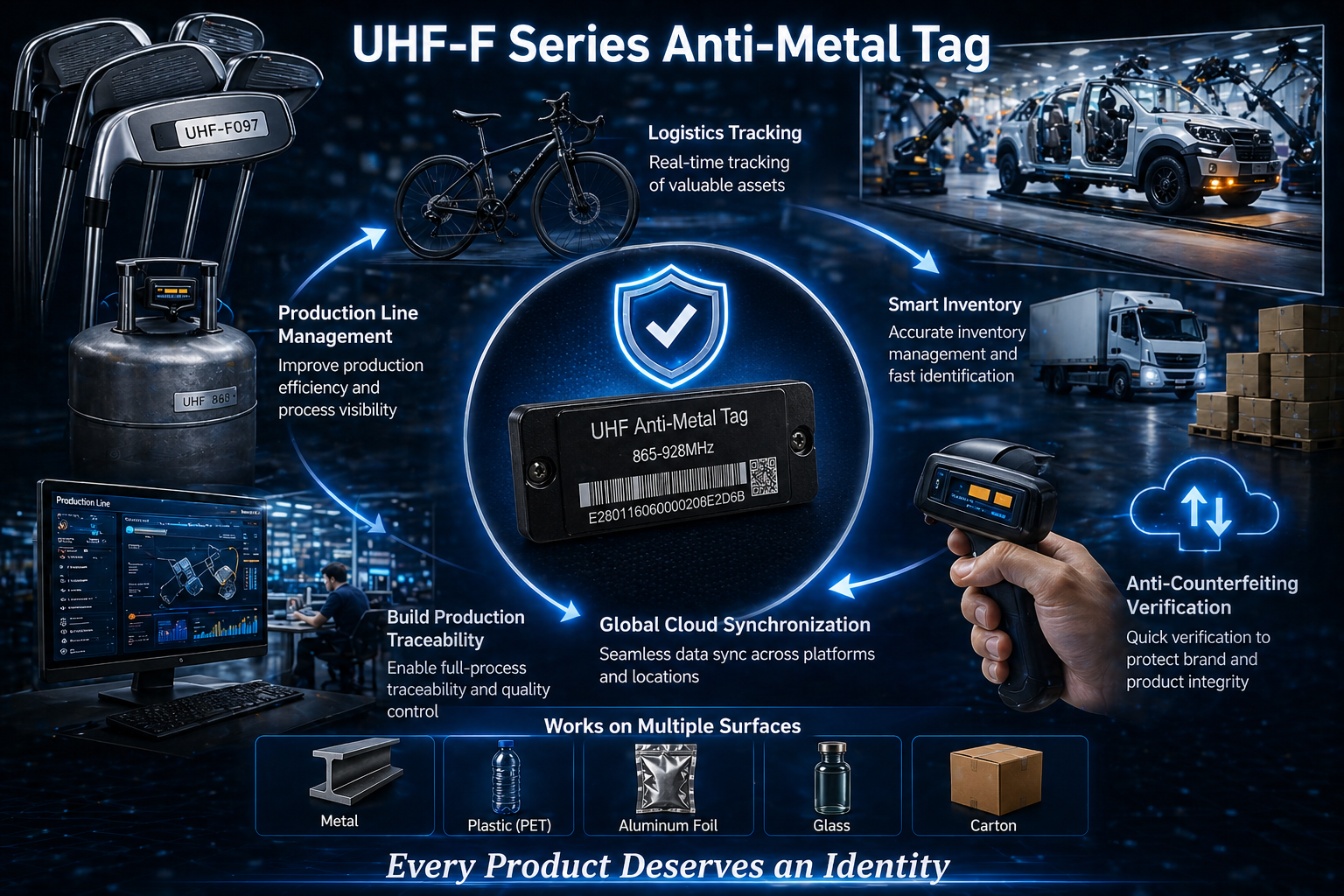
A UHF anti-metal RFID tag is a specialized type of RFID tag designed to work reliably when attached directly to metal surfaces. It operates in the Ultra-High Frequency (UHF) range (typically 860–960 MHz), enabling long read distances, fast scanning, and bulk identification.
Unlike standard RFID labels, anti-metal tags incorporate special materials and antenna designs that allow them to function in environments where metal would normally disrupt RFID performance.
Why Do We Need Anti-Metal RFID Tags?
1. The “Metal Problem” in RFID
Standard RFID tags fail on metal surfaces due to electromagnetic interference. Metal:
- Reflects RF signals
- Absorbs energy from the reader
- Creates interference and signal distortion
- Causes antenna detuning (frequency mismatch)
As a result, normal tags may:
- Have extremely short read range
- Produce unstable readings
- Completely stop working
In industrial environments full of metal (machines, racks, containers), this makes standard RFID unusable.
2. How Anti-Metal Tags Solve the Problem
Anti-metal RFID tags are engineered with:
- Isolation layers (e.g., ferrite or dielectric material)
- Special antenna tuning
- Shielding structures
These features prevent interference and ensure stable communication between the tag and reader.
In simple terms, the tag “isolates” itself from the metal, allowing it to behave as if it were in free space.
3. Business Impact: Why It Matters
Without anti-metal tags:
- Inventory accuracy drops
- Automation fails
- Manual tracking increases cost
- System ROI is compromised
With anti-metal tags:
- Reliable data capture
- Long read range (often meters)
- Real-time asset visibility
- Scalable industrial automation
Key Features of UHF Anti-Metal Tags
- Works directly on metal surfaces
- Long read distance (1–10+ meters)
- Durable for harsh environments (heat, chemicals, vibration)
- Long lifespan (up to 10 years or more)
- Supports bulk reading and fast scanning
Applications of UHF Anti-Metal RFID Tags
1. Manufacturing & Industrial Equipment
- Tool tracking
- Mold and fixture identification
- Work-in-process (WIP) tracking
2. Warehousing & Logistics
- Metal racks and shelves
- Returnable transport items (RTI)
- Containers and pallets
3. Data Centers & IT Assets
- Server and rack identification
- Cable and equipment management
4. Oil, Gas & Energy
- Pipeline and valve tracking
- Inspection and maintenance records
5. Automotive & Aerospace
- Parts traceability
- Production line automation
6. Infrastructure & Utilities
- Road assets, poles, towers
- Equipment inspection and maintenance
When Should You Use Anti-Metal Tags?
You should use UHF anti-metal tags when:
- The asset is metal or contains metal
- You need long read range (UHF)
- The environment is industrial or harsh
- High accuracy and automation are required
Conclusion
UHF anti-metal RFID tags are not just a “special version” of RFID—they are essential technology for enabling RFID in real-world industrial environments.
Because metal interferes with radio signals, standard RFID tags cannot function reliably. Anti-metal tags solve this challenge through advanced design, making it possible to track, identify, and manage metal assets with high accuracy and efficiency.
In short:
No anti-metal tag = No reliable RFID on metal.
Please contact GlueRu to provide solutions to your challenges!